Yoga
Find strength in stillness
Steady practice.
Real change.
Simple, consistent practice that reshapes how you move, breathe, and meet your life.
Practice with me:
Find a retreat or intensive
Join a workshop
Drop into a led class
Ways to Practice with Me
-
![Group of people practicing yoga indoors, sitting on yoga mats in a cross-legged position, with one person in the background in a headstand pose.]()
Intensives
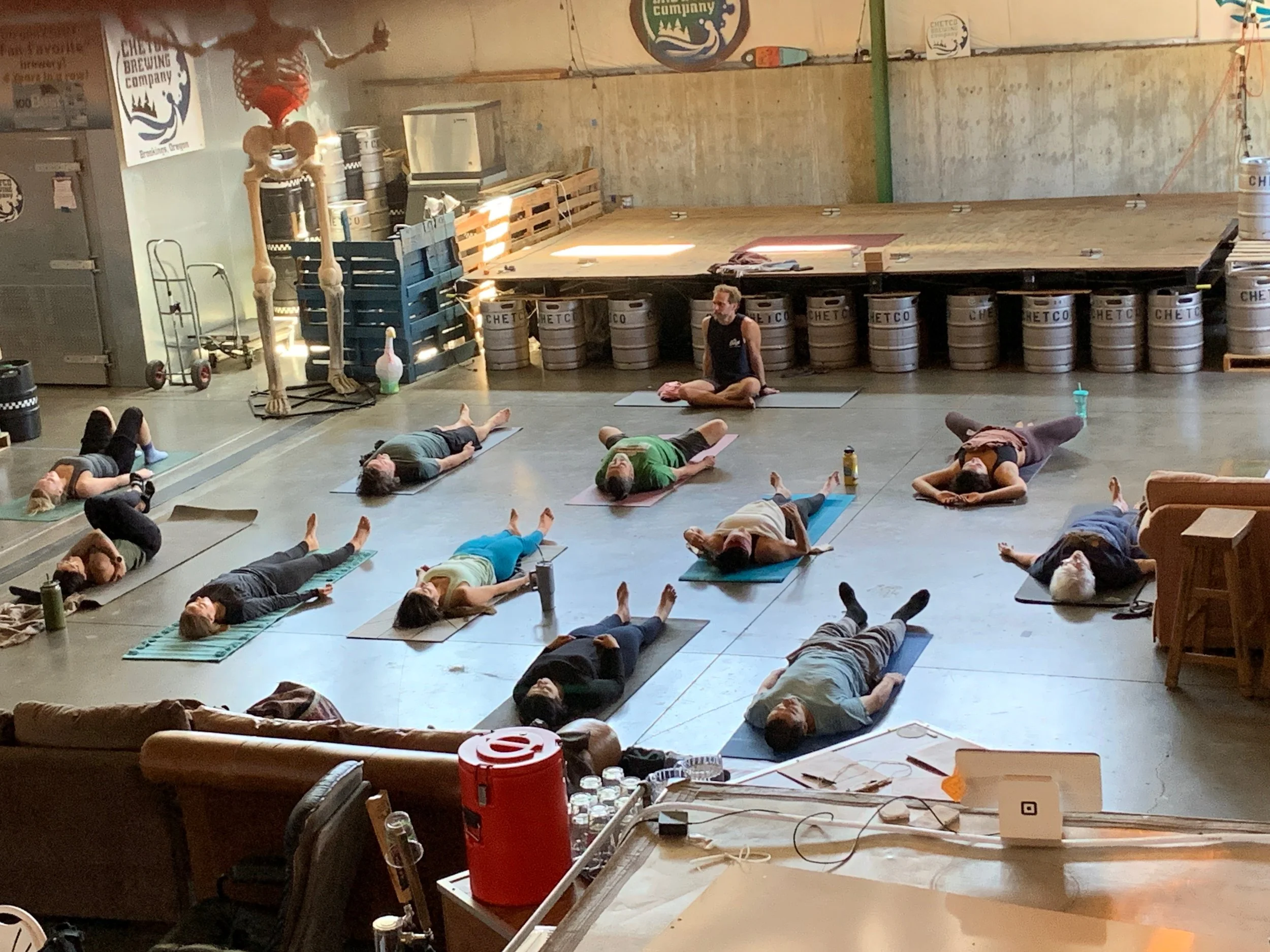
Intensives are offered in weekly or bi-weekly blocks. On Mysore days we begin, and on Led days we end, with about 30 minutes of seated practice, which may include posture instruction, concentration, pranayama, inner awareness, light chanting, or practical philosophy. This is followed by asana practice in either guided or Mysore style.
These intensives support focus, consistency, and deeper exploration of the method, including nuances often missed in daily practice. Timing and duration vary by location.
-
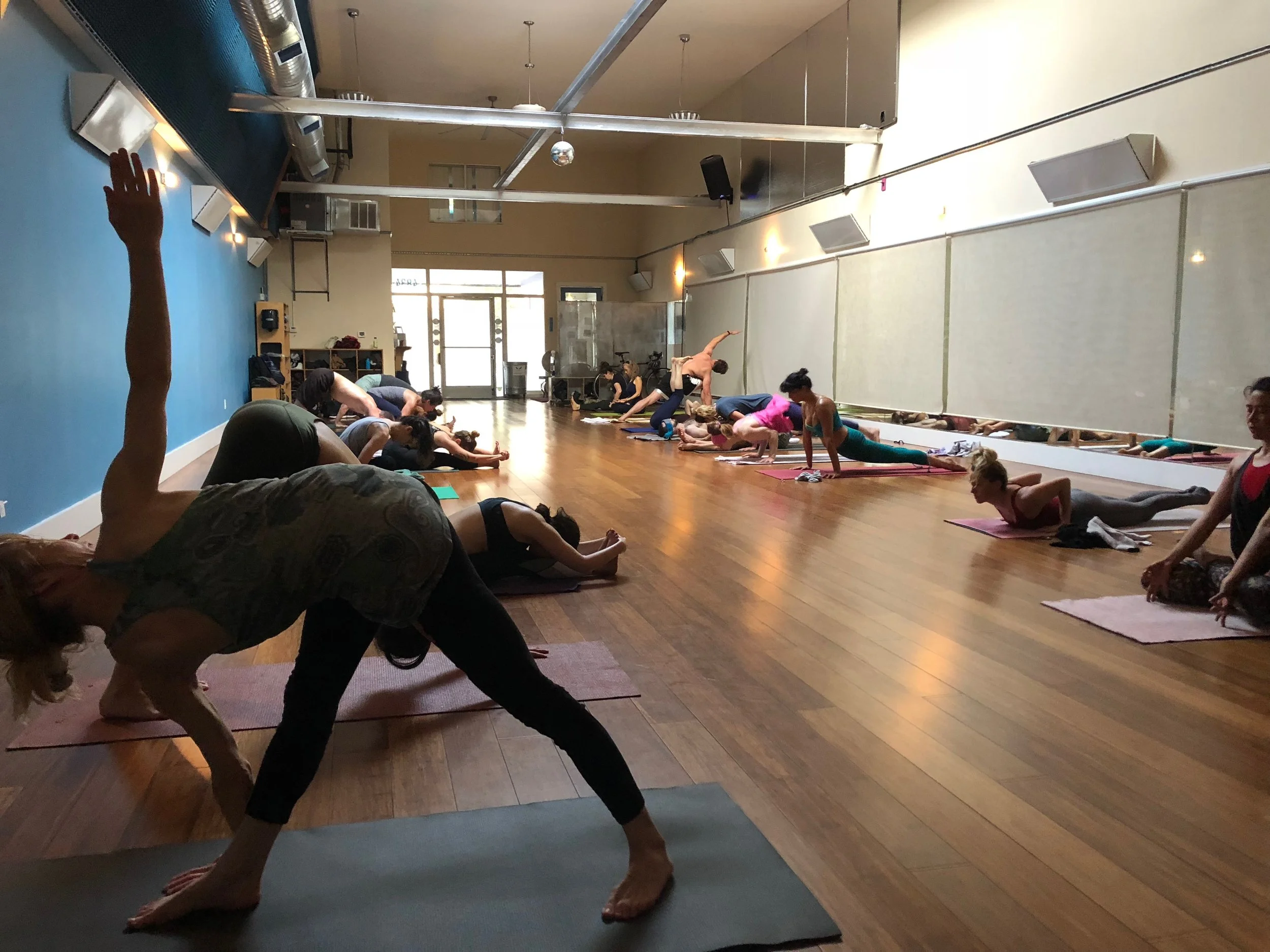
![A group of people in a yoga class practicing various poses on mats in a spacious studio with wooden floors and mirrored wall.]()
Mysore-Style
These traditionally formatted classes allow you to arrive anytime within the scheduled window, as long as you finish by the end. If you’re new to Ashtanga Vinyasa, plan for 45 minutes to an hour. You’ll learn a sequence that builds gradually through memorization and progression, with personalized instruction offered throughout, including optional hands-on adjustments by consent.
If you already have a practice and simply want space to move through it, you’re warmly welcome. Anyone is welcome to observe a class—please reach out.
-
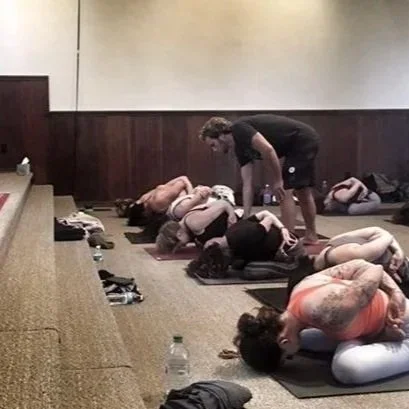
![Group of people practicing yoga or meditation in a room with a man assisting one of the participants.]()
Led Classes
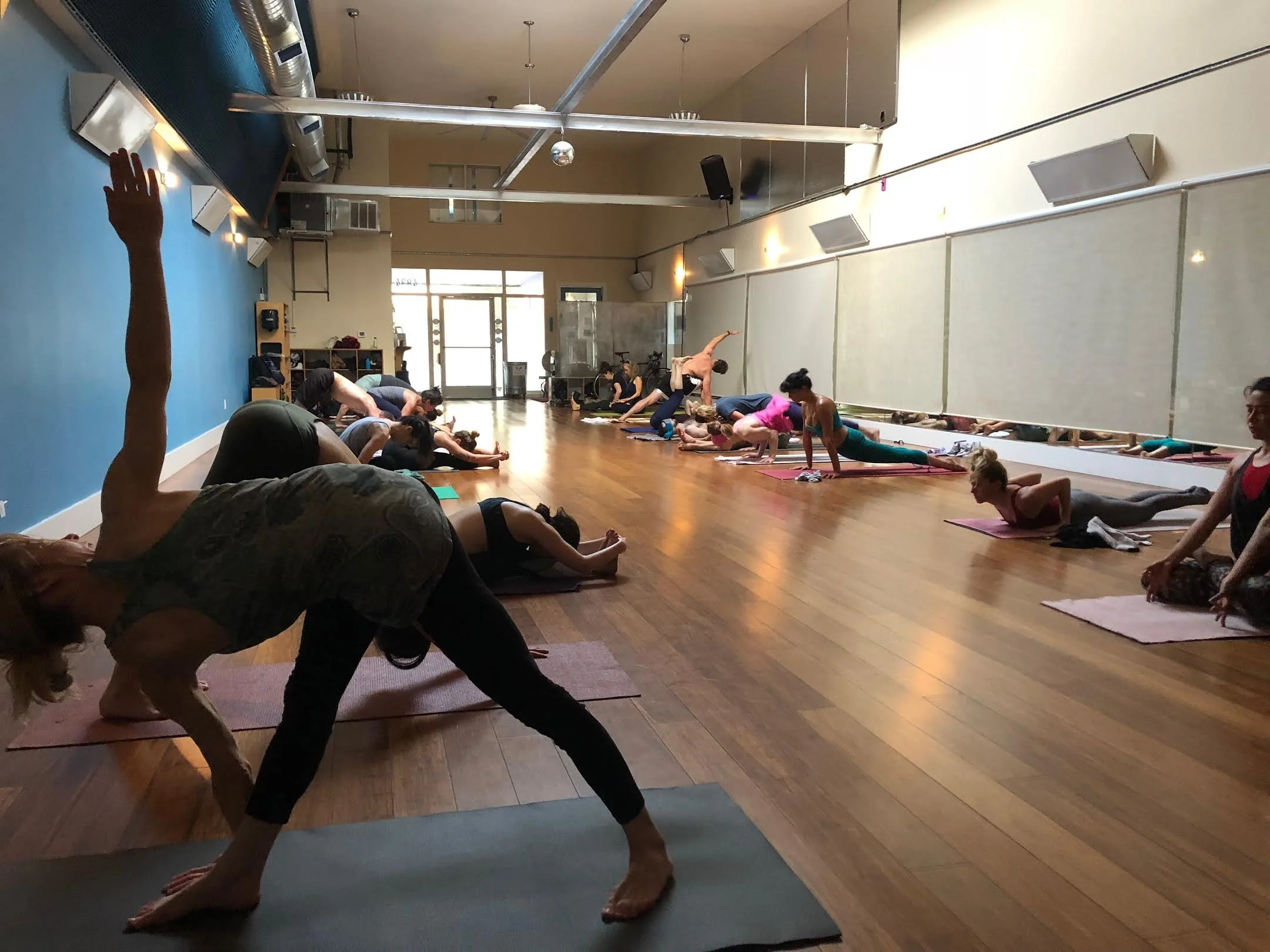
These classes are guided posture by posture, breath by breath, in a shared rhythm. Depending on the class, you may explore advanced postures or focus on foundational elements. Variations support the arc of practice: arriving in stillness, warming the body, opening and strengthening, then softening into steadiness.
Classes begin promptly at the listed time; please arrive at least 5 minutes early to settle in quietly.
-
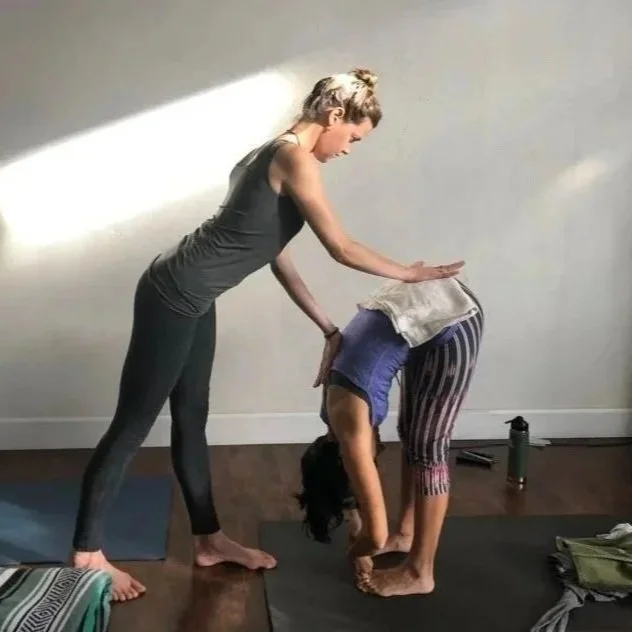
![A woman assisting a girl during a yoga practice; the girl is in a forward bend pose with her hands on the floor, and the woman is gently supporting her back with one hand while guiding her. They are on yoga mats in a room with wooden floor and a towel and water bottle nearby.]()
Workshops
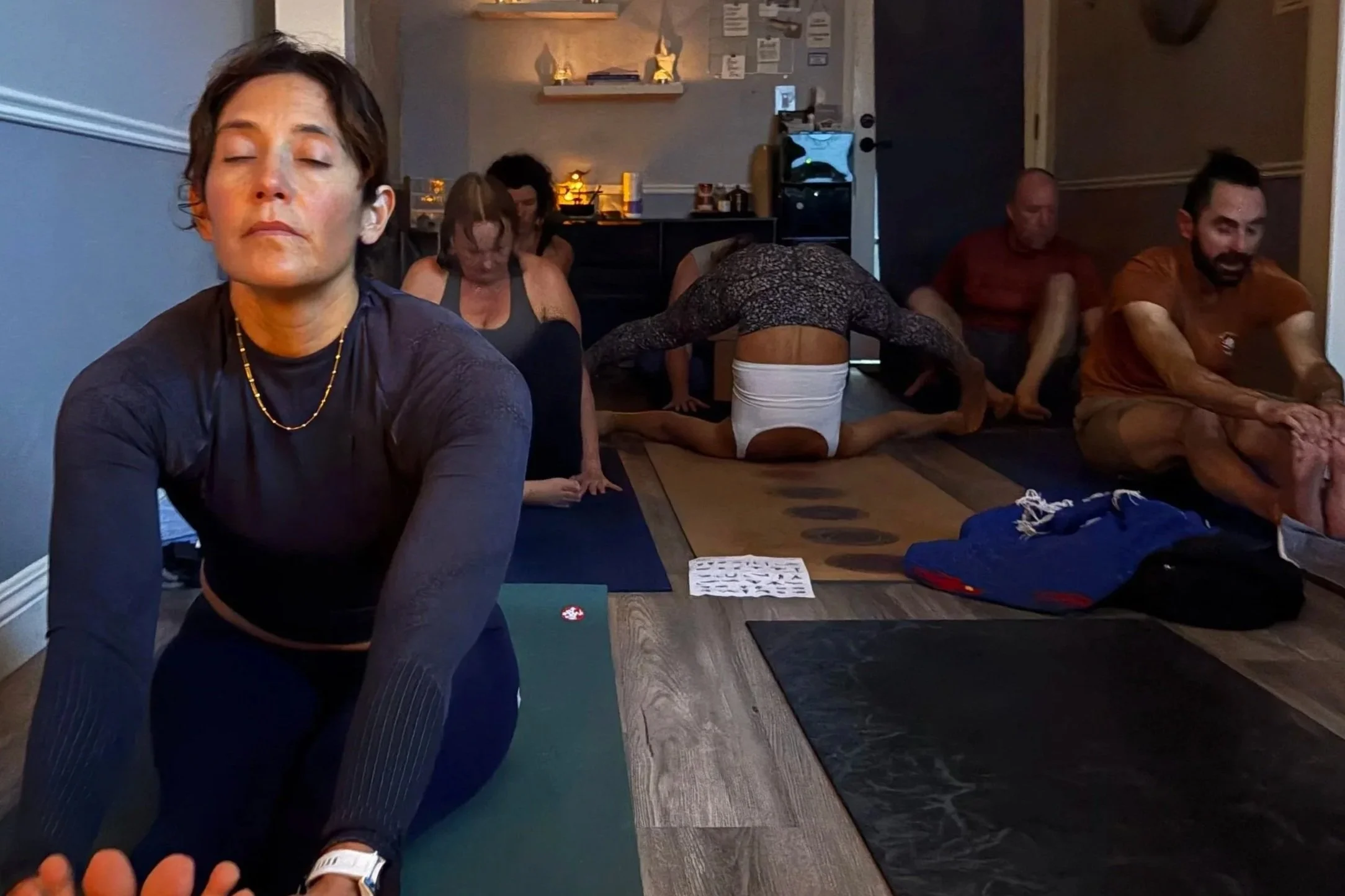
These offerings are deeply experiential and exploratory. Topics may include asana alignment and sequencing (including historical and subtle aspects of postures), philosophy taught through traditional chanting with thoughtful breakdown and reflection, pranayama informed by both classical methods and modern nervous system science, and listening circles—a cross-cultural practice for cultivating understanding and shared wisdom.
About Ashtanga Yoga
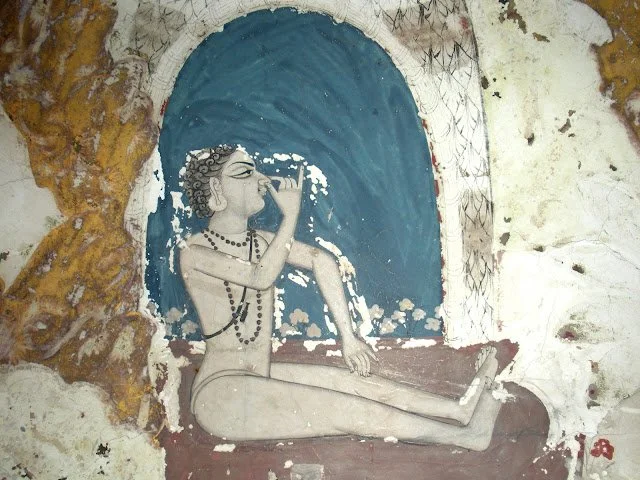
Ashtanga Yoga is an ancient articulation of the process and principles of awakening to truth.
At its essence, it is the turning inward of the mind in order to steady its seemingly ceaseless movement. This tradition is described as an eight-fold path:
-
Principles guiding relationship with others
-
Principles guiding relationship with oneself
-
Physical posture
-
Regulation and liberation of the breath
-
Turning the senses inward
-
Concentration
-
Unbroken meditation
-
Meditative absorption

Modern Ashtanga Yoga
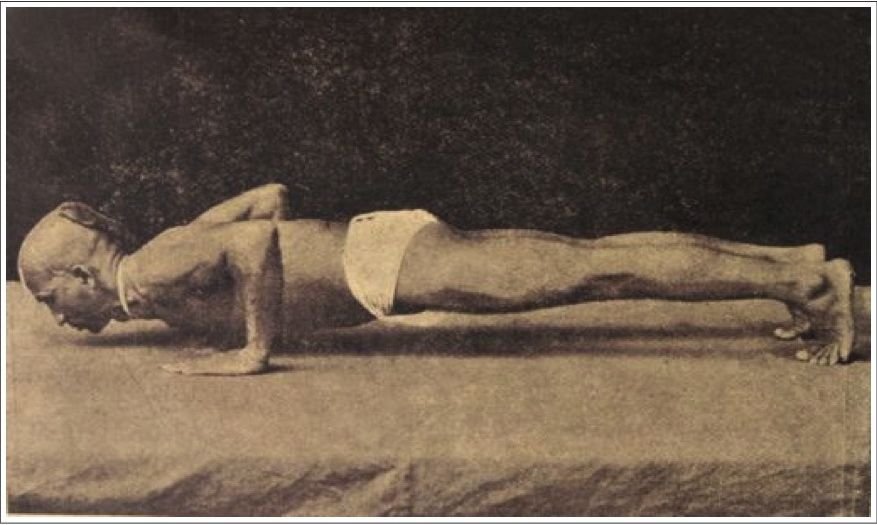
Ashtanga Yoga, as it is taught now, is a more recent innovation, introduced by Sri T. Krishnamacharya during his time in Mysore, India, and shared with the world by Pattabhi Jois and his students.
In this system, asana (postures) are placed into a relatively set sequence (vinyasa) and linked together with breath, bandha (internal energetic control) and steadied by drishti (gaze).
The practice and process have been conveyed through the traditional and unbroken transmission of paramparā; “warm hand to warm hand” from student to teacher. While today there are books, videos, and much on the internet describing the technicalities of the practice, these technicalities are but a small part of the practice and its wisdom.
Practiced consistently, this curriculum cultivates steadiness, strength, and mobility in the body, while beginning to focus attention and reinforce breath awareness.
These qualities support and prepare the practitioner for the more subtle aspects of yoga, which are attended to in all of my classes.